
The dead sea: collection of tweets, articles, maps and figures on the #migrationcrisis in the Mediterranean


New project supported by IRiS
written by Caroline Tagg and Esther Asprey
Department of English Language and Applied Linguistics, University of Birmingham
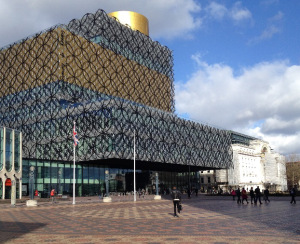 The first week of March saw us spending our afternoons sitting at our stall in the foyer of the new Library of Birmingham. We were ‘Messaging in the Midlands’, a research project funded by the Institute of Research into Superdiversity (IRiS) to explore the diversity of identities performed through online messages and the ways in which people pick up and exploit a variety of locally-available resources to do this. Our aim was to attract people to our stall, get them to fill in a short questionnaire on their background (where they were from and where they had lived), the languages they spoke and the online platforms they used, and then ask them to contribute examples of their online messages.
I, Caroline, am a researcher on both this project and the TLANG…
View original post 721 more words
IRiS and SAST Conference, Birmingham 2 July 2015 The Institute for Research into Superdiversity (IRiS) at the University of Birmingham, together with the project Social Anchoring in Superdiverse Transnational Social Spaces (SAST) is organising a one-day interdisciplinary conference which will focus upon theories on and research into adaptation and integration in an era of superdiversity.... Continue Reading →

By Nando Sigona (originally published in Postcard from...) Channel 4 ‘Who are you?‘ series* by/with Turner-Prize winner Grayson Perry is a fascinating exploration into contemporary portraiture and society, as one alone was not already a big enough challenge! the series follows Perry’s creative journey to the production of portraits that capture individuals (not the usual portrait... Continue Reading →
Two new IRiS Working Papers (no. 6 and 7) exploring issues related migration, social networks and integration policy and practice are out today. Using a wide range of literature, Dr Marta Kindler and colleagues (IRiS WP no. 6) focus upon the ways in which social networks and social capital have been found to promote or... Continue Reading →
Please find below details of 3 Research Fellow vacancies to work on the project ‘Understanding the Practice and Developing the Concept of Welfare-Bricolage (UPWEB)’ which is part of the NORFACE-Research-Network ‘The Future of Welfare States’ and connects researchers in Great Britain, Sweden, Portugal and Germany. The project will reconceptualise welfare theory by mapping how residents... Continue Reading →
Public Seminar: 20 January, 12.30-2.30pm in Room 710, Muirhead Tower, University of Birmingham. This winter Jacob Lind, a PhD student from Malmö University, is visiting IRiS to conduct ethnographic fieldwork for six months among migrant children and families in an irregular situation. His work is part of a research project led by Dr Anna Lundberg,... Continue Reading →

by Nando Sigona
 Enrico Rossi, president of Tuscany, and his neighbours, 2014
In the last weeks, Italy has witnessed a spiralling resurgence of xenophobia, with migrants being violently attacked by gangs of far right activists and marches against immigrants organised in highly diverse, and often deprived, neighbourhoods by alleged ‘ordinary’ citizens. The long list of episodes which are contributing to create a toxic climate and a widespread sentiment of moral panic, includes a visit by the media-savvy new leader of the Northern League, Matteo Salvini, to a Roma encampment just before the regional election in Emilia Romagna that provoked a violent response from anti-fascist and anti-racist activists and hours of media coverage for Salvini; and a 500 people-strong sit-in organised by the right wing student organisation Blocco Studentesco in front of a Roma camp in via Cesare Lombroso in Rome to protest against the alleged misbehaving of some Roma against…
View original post 456 more words
In September 2014, the Conservative think-tank Bright Blue hosted an oral evidence session on immigration. A team of high-profile commissioners interviewed experts from academia, government, journalism, the third sector and business. There were eight main sessions: business and growth; work and poverty; education, research, innovation and skills; local communities and public services; refugees, border control, visas and detention... Continue Reading →
All are welcome at this seminar by Professor Ralph Grillo (University of Sussex), to be held on 19 November 2014 from 1.00 to 2.30 pm, Room 429: 4th Floor (West), Muirhead Tower, University of Birmingham Synopsis Contemporary European societies are all in varying degree multi-ethnic and multi-cultural, and 'superdiversity' (or rather, 'super-diversification') in its various... Continue Reading →


 Conversations with Iris: Podcast on migration, diversity and displacement

 The Age of Superdiversity