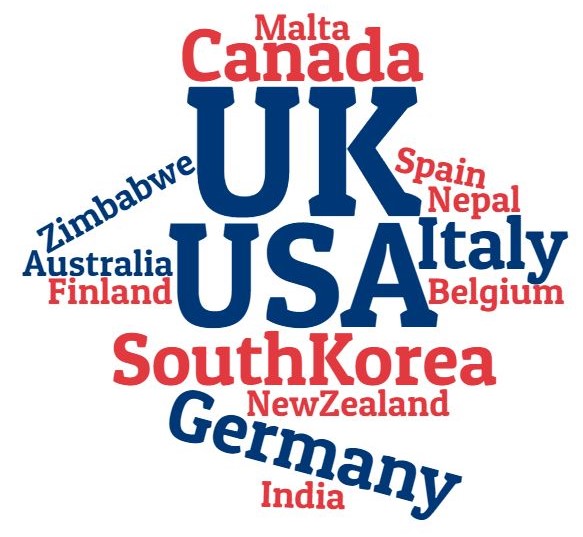
Becoming or not becoming British? Marie Godin and Nando Sigona look into naturalisation decision making among EU citizens in the UK after Brexit in a new open access article published in Ethnic and Racial Studies.
Reflections on Refugee Backlash and Gendered Harms
by Sandra Pertek (@sandrapertek), IRiS, University of Birmingham Within a window of 15 hours, I virtually travelled in time zones from GMT -5 to GMT +5. These journeys reminded me yet again about some of the most haunting downfalls of humanity. First, I participated in the Bold New Voices in Migration Research Conference organised by the Immigration Initiative... Continue Reading →
Mapping the field: Migration Studies
We are pleased to launch a new series of blog posts aimed at providing insights into the key themes, centres of production and geographical foci in migration studies today through an analysis of the coverage of some of the key academic journals in the field. The series is written and researched by the students on... Continue Reading →
Understanding migration and diversity in the age of ‘crises’: join our MA programme
https://youtu.be/wVvA2QhT34M Registration for our MA programme on migration is still open. It is a research-intensive programme taught by researchers at the Institute for Research into Superdiversity. To find out more: https://www.birmingham.ac.uk/postgraduate/courses/taught/social-policy/migration-studies.aspx
Community sponsorship Photo Exhibition 2020
In early 2020 the University of Birmingham ran a photo competition for all volunteers and refugees involved in Community Sponsorship in the UK. A number of entries were received, with a winner announced for each group. This online exhibition is a showcase of all of the photos that were entered into the competition. Volunteer group... Continue Reading →
“It took 2 hours and one third didn’t get through”: Piloting the settled status application with Roma migrants
IRiS research fellow Dr Marie Godin and Mihai Calin Bica reveal the challenges the Settled Status application pose to Roma applicants.
EU families & Eurochildren in Brexiting Britain
By Marie Godin and Mihai Calin Bica*
Since the Brexit referendum that took place on 23 June 2016, the Roma Support Group[1], a community organisation working with Roma people in the UK, has been active in informing community members about their rights. In addition, the organisation has been involved in campaigning towards local, regional and national policy makers in order to raise awareness about the specific vulnerabilities of the Roma population and their future migration status. In that respect, it coordinated a special joint roundtable of the All-Party Parliamentary Group for Migration and All-Party Parliamentary Group for Gypsies, Travellers and Roma, which was held in July 2018[2] so Roma’s people concerns could be heard. Following that encounter, the Home Office invited the Roma Support Group to take part in monthly vulnerable user group meetings[3] in relation to the EU Exit Settlement Scheme[4].. As part…
View original post 1,323 more words
Eurochildren meets Keir Starmer
IRis Deputy Director discusses the findings of the ESRC-funded Eurochildren project with Labour Shadow Brexit Secretary Sir Keir Starmer.
EU families & Eurochildren in Brexiting Britain
During his visit to the University of Birmingham on 7 February, Labour Shadow Brexit Secretary Sir Keir Starmer met with Nando Sigona and the other Birmingham-based UK in a Changing Europe research projects. Eurochildren director presented some interim findings from the project, in particular concerning the mapping of 40 years of EU migration towards the UK and the responses from EU nationals to the uncertainty of Brexit.


On superdiversity in a ‘crisis mood’ | Nando Sigona interviewed in openDemocracy
“We need to question the categories we use and how we pigeonhole society. This opens spaces for us to imagine a different kind of society": Nando Sigona in conversation with Rosemary Bechler in OpenDemocracy. Source: On superdiversity in a ‘crisis mood’ | openDemocracy
It’s the culture, stupid! Or is it?
By Thomas Hylland Eriksen The events in Cologne have sparked controversies across Europe. This time, the topic is not the economic and social costs of the refugee crisis, but questions concerning culture and gender. We need a proper language in which to address these issues. There is no simple answer as to what exactly happened... Continue Reading →