
Nando Sigona
As the 2026 FIFA World Cup gets underway, one statistic stands out: 289 of the tournament’s 1,248 players were born in a country different from the one they represent. Nearly one in four players embodies a story of migration, diaspora, or multiple forms of belonging. This is no longer about success stories of multi-ethnic football teams, but about stories of transnational connections spanning in multi-directions.
Only eight of the tournament’s 48 teams have squads composed entirely of players born in the country they represent: South Africa, Brazil, Czechia, Colombia, Saudi Arabia, Austria, Sweden and Panama.
While the World Cup is organised around nation-states, often imagined as static containers of population, the data reveal a much more mobile and interconnected reality. Looking at where players were born reveals a striking concentration of football talent in a handful of global cities whose influence extends far beyond national borders.
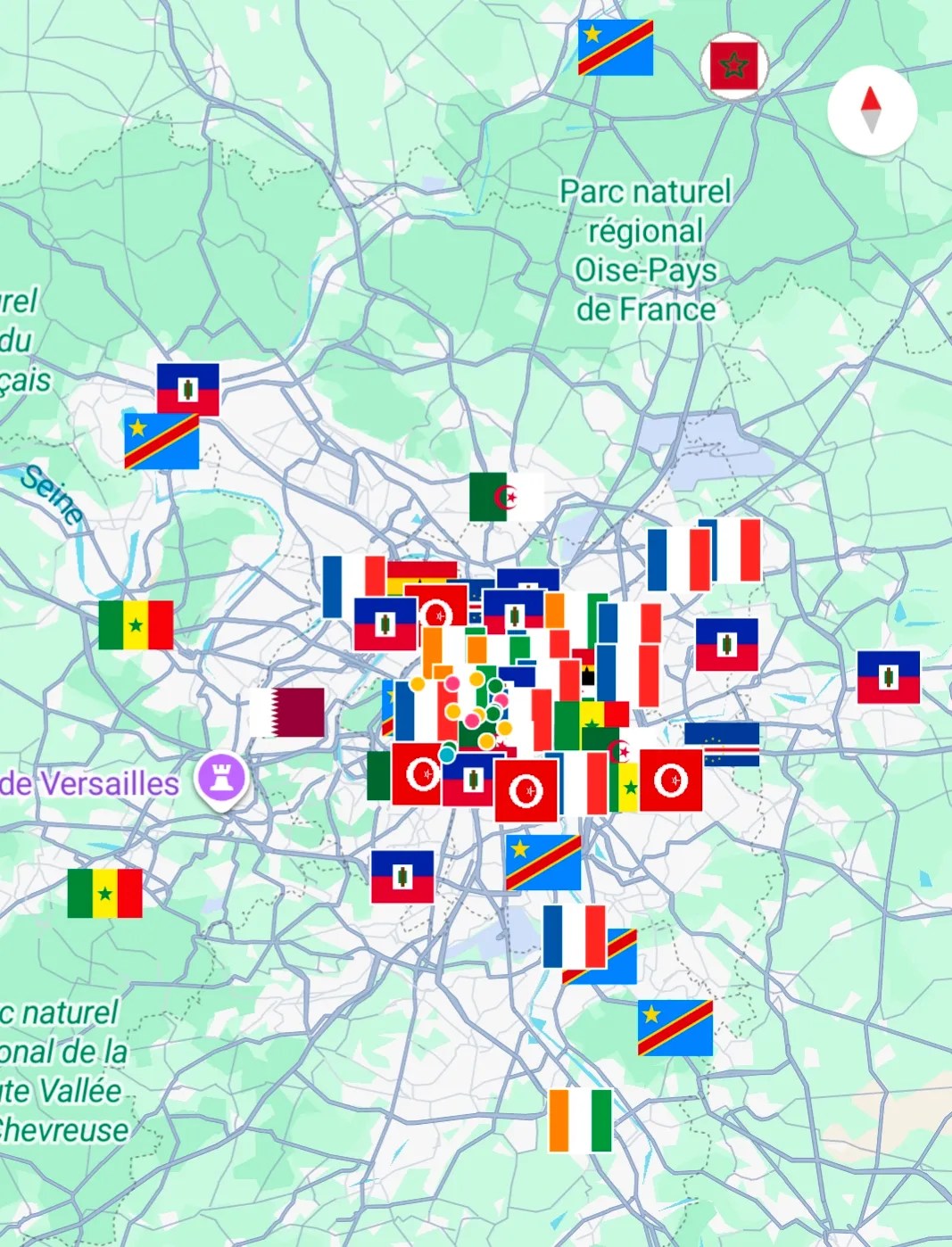
Perhaps the most striking example is Paris. The French capital is the world’s leading exporter of football ta lent. More than 40 World Cup players were born there, yet most will not be playing for France. Instead, they are spread across roughly 15 national teams, reflecting the city’s connections to migration routes, former colonies and transnational communities.
London also features prominently, contributing around 17 players representing eight different national teams. Yet even London is overshadowed by Paris, whose influence extends across almost a third of the countries competing at this World Cup.
National teams are often presented as symbols of rooted national identity. International football remains one of the few arenas where nationhood is performed so visibly and emotionally. Flags, anthems and national colours create the impression of clear boundaries between “us” and “them”. Yet World Cup squads have long told a more complicated story. As Myriam Cherti has shown in her analysis of Morocco’s national team, football frequently reveals the enduring significance of diasporic ties and multiple forms of belonging. Players may be born in one country, raised in another, and represent a third through family heritage.
This is not a new phenomenon. Research by the Migration Policy Institute shows that foreign-born players have been part of the tournament since 1930, and their numbers have generally increased over time, mirroring broader patterns of migration, mobility and citizenship.
Migration may also contribute to sporting success. Drawing on a larger pool of players through diaspora communities and transnational family networks can expand national teams’ options and facilitate the circulation of football knowledge, training practices and playing styles. As recent analysis has suggested, migration is not only reshaping who represents nations at the World Cup; it may also be helping some teams compete more effectively on the global stage.
The geography of player birthplaces also produces some striking observations. Italy, one of the world’s great football nations, is not only absent from the tournament as a national team, but only three World Cup players were born in Italy. The entire country barely matches the contribution of a single Paris arrondissement.
But the broader point is more significant than football trivia. World Cup squads remind us that national identities are not fixed or exclusive. They are shaped by movement, family histories, colonial legacies and migration trajectories. Far from undermining national teams, these connections have become an integral part of what many national teams are.
The World Cup remains a powerful stage for the performance of national myths and stereotypes. The Norwegian team’s official photograph in Viking costume is just one recent example. Yet the players themselves often tell a different story: one of overlapping identities, transnational trajectories and multiple attachments.
If we look beyond the flags on their shirts, the tournament offers a vivid reminder that migration is not an exception to national history. It is part of it. Perhaps it is fitting that Paris, a city shaped by centuries of migration and diversity, has become the unofficial capital of this World Cup.


Leave a Reply