Immigration is undoubtedly one of the most fundamental issues that will decide the outcome of the UK Referendum on EU membership, and arguably one of the most misunderstood and mispresented. As part of the University of Birmingham’s programme of events in the run up to the EU Referendum , the Institute for Research into Superdiversity... Continue Reading →
Migration, informality and violence: A reflection at the AAG 2016 San Francisco
By Arshad Isakjee On March 26 2016 I presented a paper with colleagues Dr Thom Davies (Sociology, University of Warwick) and Dr Surindar Dhesi (Environmental Health, University of Birmingham) on the informal refugee camp in Calais. Since joining IRiS in 2015, I have been working as part of an interdisciplinary team of researchers on an... Continue Reading →
Leave or remain? Diary of an EU citizen in the UK
Bitter sweet pre- and post- EU referendum diary by Nando Sigona coming to term as many EU long-term residents in the UK with a referendum in which so much is at stake for them but with no right to vote. Catch up with all episodes in here!
Lost in the world: former unaccompanied minors in orbit
Young people seeking safety and security are subjected to the vagaries of all kinds of ‘solutions at various national borders’. Sometimes they are taken in and sometimes they are turned away. Sometimes, as Nando Sigona and Elaine Chase (UCL) write in The Conversation, they are offered help but then deported as soon as they become... Continue Reading →
Why are unaccompanied migrant children disappearing in the thousands?
Until the EU recognises the specific needs of child migrants and makes it a priority to swiftly reunite them with family members, Nando Sigona and Jenny Allsopp argue in an op-ed published in OpenDemocracy, many will likely continue to abscond from the reception system. The ‘disappearance’ of 10,000 migrant children after arriving in the EU... Continue Reading →
EU migrants and access to benefits: where’s the controversy?
By Jenny Phillimore @japhillimore This week Jeremy Corbyn, on a visit to Brussels, is expected to criticise David Cameron’s call for an ‘emergency brake’ on benefits for new migrants. In a break with popular opinion, Corbyn will describe Cameron’s demands as potentially discriminatory. Corbyn’s actions are seen as high-risk and controversial because they are so... Continue Reading →
Denmark migration law: a sign of things to come?
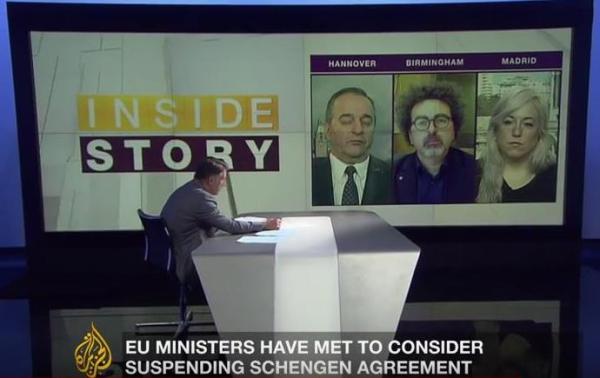
Nando Sigona speaking to Al Jazeera's Inside Story on 27 Jan on Danish decision to seize asylum seeker assets.
Trudeau on the diversity potential
Justin Trudeau, Canada’s prime minister speaks about why multiculturalism needs to be an integral part of all children’s education. It’s important, he argues, that everyone have the tools to understand “you don’t have to choose between the identity that your parents have and being a full citizen of Canada.” http://qz.com/602525
It’s the culture, stupid! Or is it?
By Thomas Hylland Eriksen The events in Cologne have sparked controversies across Europe. This time, the topic is not the economic and social costs of the refugee crisis, but questions concerning culture and gender. We need a proper language in which to address these issues. There is no simple answer as to what exactly happened... Continue Reading →
Is a distribution key system the solution to the EU’s refugee crisis?
by Nando Sigona
The Dublin regulation in its three incarnations has attracted plenty of criticism on various grounds and from various statutory and non-statutory actors – the most noticeable perhaps being it is a system that impact unevenly on EU member states, with countries at the EU’s southern border particularly exposed because of their position. These countries have traditionally responded to the pressure imposed by the Dublin regulation in two ways – formally, demanding more solidarity from other member states and a different system altogether; informally, letting people slip through their bureaucratic net not finger-printing them (see Italy) or allowing such poor reception conditions for asylum seekers to force other member states to stop returning so called ‘Dublin cases’ on human rights ground (see Greece).
The events of the last months have de facto led to the suspension of the Dublin regulation and further intensified the call for a substantial revamp of…
View original post 375 more words