Refugee week 2017

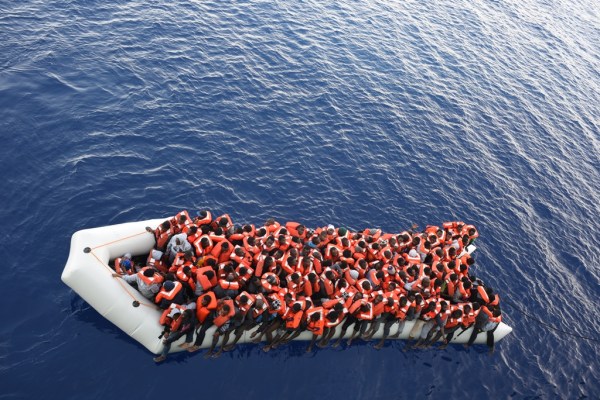
World Refugee Day takes place each year on June 20 and to support the day the UK will host its own refugee week from June 19-25. Activities which take place during this week are a celebration of diversity, and the rich cultural, social, economic and artistic contributions of refugees to the UK. Refugee week started... Continue Reading →

The tower: Diary of an EU citizen in the UK (26)

The Grenfell Tower is a microcosm of London’s superdiversity and income inequality.

Nando Sigona's avatarPostcards from ...

London’s burning, London’s burning.

Fetch the engines, fetch the engines.

Fire fire, Fire Fire!

Pour on water, pour on water.

My son is in Year 1, last term the 1666 fire of London was the core theme of his school activities – he made dramatic fire-related artwork, he learned about fire and wood houses, firefighters and the pain of those who survived. They were read passages of Samuel Pepys diary. He asked a thousand questions. He wanted to know if our home is safe. In his school diary he wrote: People were fleeing like meerkats; the flames were like dolphins jumping on a flat sea. He sang and sang this song.

How do I tell my son, how do we tell our children that in 2017 London is burning again? How can we explain to a 6-year- old that someone like him in London had half of his classmates vanished…

View original post 578 more words

Sexual and Gender-based Violence in the Refugee Crisis: vulnerabilities, inequalities and responses

Professor Jenny Phillimore has secured funding from the Europe and Global Challenges Programme to lead a new research project to examine Sexual and Gender-based Violence in the Refugee Crisis: vulnerabilities, inequalities and responses. The project will use a constructionist approach to examine refugees’ experience of SGBV across the refugee journey.  Supported by Dr Lisa Goodson,... Continue Reading →

Mass migration and real estate in European cities

Dr Lisa Goodson has recently completed a report funded by the Urban Land Institute to examine the innovations in social housing being driven by rapid scale immigration. The report, Mass migration and real estate in European cities, highlights how immigration has brought changes to the structure of cities, bringing about a need for multi-sectoral responses in areas such... Continue Reading →

Mapping the biopolitics of EU membership

IRiS team ( Nando Sigona, Laurence Lessard Phillips, and Rachel Humphris) to lead new research on the impact of Brexit on EU nationals and their families in the UK.

Nando Sigona's avatarEU families & Eurochildren in Brexiting Britain

The UK has been a member of the European Union for 40 years. Throughout that time there has been intermingling of people and institutions which can be most clearly seen in the growing number of bi- and mixed-nationality EU families in the UK and their children,  many of whom born in the UK and holding a British passport. This is a growing, and yet understudied and underreported, segment of the British society. In a post-EU referendum context, where the rhetoric about curbing EU immigration has permeated political, media, and popular discourses, producing a stark ‘us and them’ narrative, the question left unasked and unanswered is what are the human and emotional costs of this abrupt geopolitical shift if ‘us and them’ are the same?

Through the study of Eurochildren and their families and their experience and responses to Brexit, this project  – funded by the Economic and Social Research Council…

View original post 168 more words

Racial cities: the segregation of Romani people in urban Europe

Dr Giovanni Picker recently joined IRiS as a Marie Sklodowska-Curie Research Fellow. Dr Picker's latest book Racial Cities: Governance and the Segregation of Romani People in Urban Europe is now available through Routledge. Racial Cities is the first comprehensive analysis of the segregation of Romani people in Europe, providing a fine-tuned and in-depth explanation of this phenomenon.... Continue Reading →

Blog at WordPress.com.

Up ↑